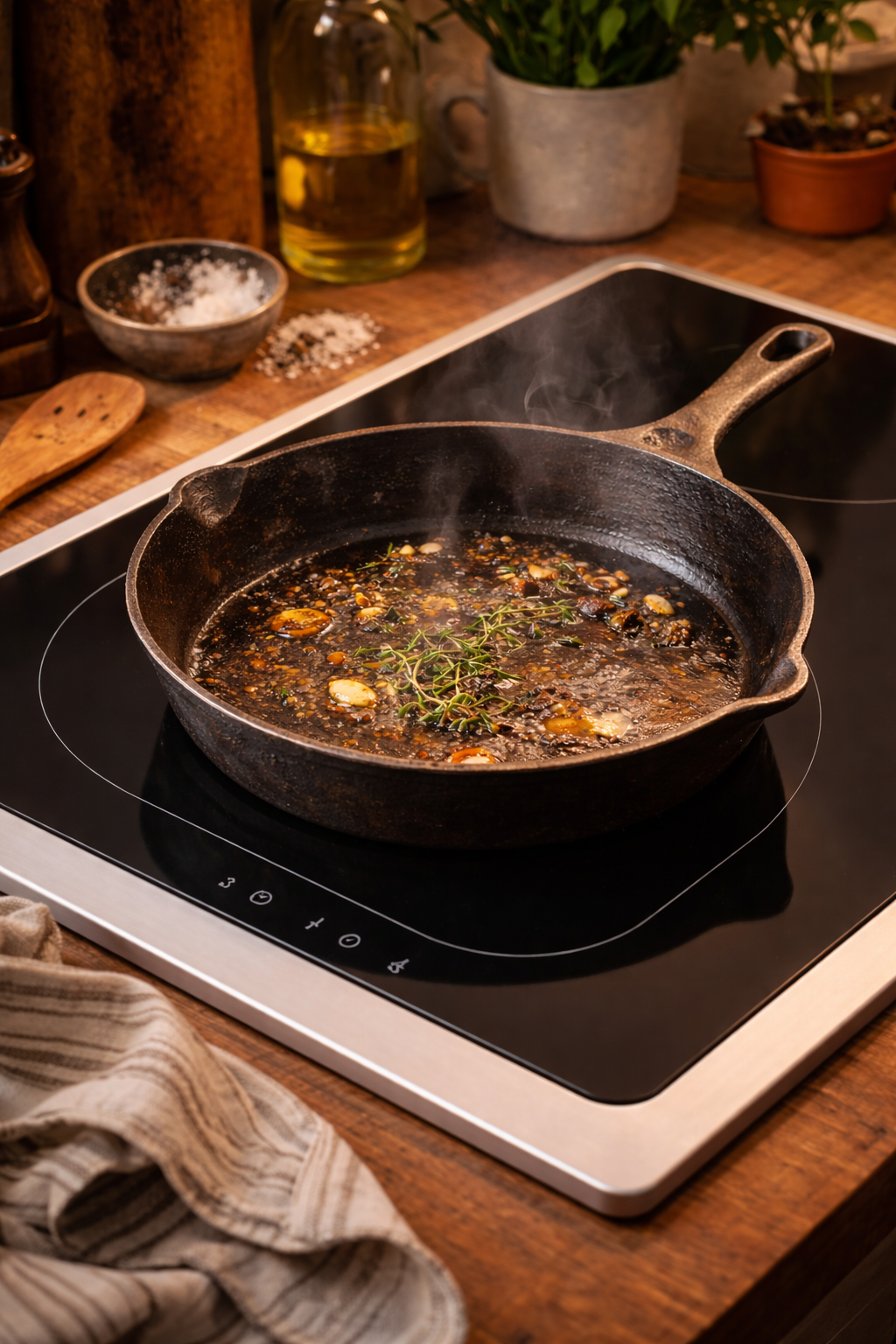
If you are used to gas or traditional electric stoves, cooking dried beans on an induction cooktop can feel a little intimidating at first. Induction heats faster, responds instantly, and behaves differently than the stoves many of us learned on. The good news is this actually makes induction a great tool for cooking pinto beans once you understand a few basics.
Here is how to get reliably tender, flavorful pinto beans on an induction stove without overthinking it.
Start with a soak, but do not stress about perfection
Soaking your pinto beans for 6 to 10 hours helps them cook more evenly and shortens the overall cook time. If they soaked a little longer or a little shorter, that is fine. Drain them, give them a quick rinse, and they are ready for the pot.
Add fresh water so the beans are covered by about two inches. This gives them room to expand as they cook.
Bring to a boil, then back it way down
One of the biggest advantages of induction is how quickly it brings water to a boil.
Set the stove to a higher setting just long enough to get things going. As soon as you see a steady boil, reduce the heat immediately. For most induction ranges, the sweet spot for beans is a low to medium-low setting where you see only occasional bubbles.
What you want is a gentle simmer. The liquid should barely move. If the beans are bouncing around, the heat is too high and they can split or turn grainy.
Why gentle heat matters more on induction
Induction delivers heat directly to the pot, not the air around it. That means even a small adjustment on the dial can make a noticeable difference.
A gentle simmer:
- Keeps the bean skins intact
- Encourages creamy interiors
- Prevents scorching on the bottom of the pot
- Produces a cleaner, more balanced bean broth
If you are used to gas, you will likely need a lower number than you expect.
Lid on, lid off, or somewhere in between
Leaving the lid fully on can trap heat and push the pot back into a boil. Leaving it fully off can lead to too much evaporation.
The best approach is a cracked lid. This lets steam escape while maintaining a steady temperature. Check occasionally and add hot water if the liquid drops below the beans.
Stir occasionally, not constantly
Induction heats evenly, but beans still benefit from a stir every 10 to 15 minutes. This helps prevent sticking and gives you a chance to check the simmer level.
If you notice the beans sticking or the bottom darkening, lower the heat slightly and stir more frequently.
When to salt and season
Wait until the beans are starting to soften before adding salt. This is usually 30 to 45 minutes into cooking. Salting too early can slow softening, while salting too late can leave the beans tasting flat.
Once softened, you can add:
- Salt
- Onion or garlic
- Bay leaf
- Cumin or chili powder
Save acidic ingredients like tomatoes or vinegar for the very end.
How long it takes
With soaked beans on a steady induction simmer, expect:
- 60 to 90 minutes for tender beans
- Slightly longer if you prefer very creamy interiors
They are done when they are soft all the way through and easily crushed between your fingers.
The induction advantage
Once you get used to it, induction is one of the best ways to cook beans. The control is precise, the heat is consistent, and adjustments happen instantly. That makes it easier to maintain the calm, steady simmer that pinto beans love.
If you cook beans regularly, induction turns what used to feel like babysitting the stove into a relaxed, predictable process.
Simple ingredients. Gentle heat. A little patience. That is all pinto beans really need, induction stove or not.