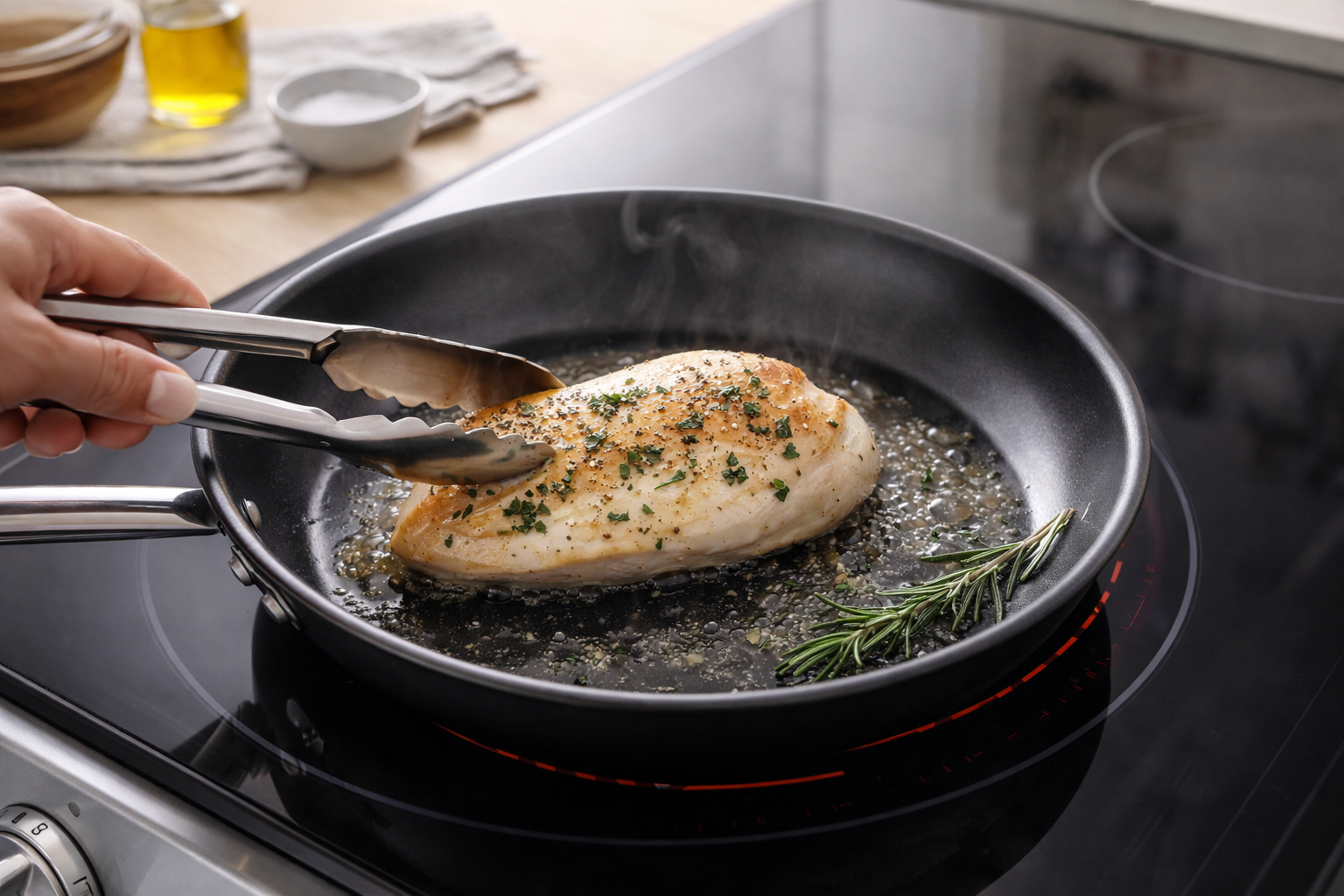
Induction cooking is becoming more common in home kitchens, especially as people remodel or look for alternatives to gas. If you are considering an induction cooktop or just trying to understand how it compares to what you already use, here is a clear, practical look at the advantages and drawbacks.
The Pros of Induction Cooking
Fast heating
Induction cooktops heat cookware directly, not the air around it. This means water boils faster and pans respond almost instantly when you adjust the heat.
Excellent temperature control
Because the energy transfer is immediate, small changes to the power setting show up right away in the pan. This makes it easier to simmer, sear, or adjust heat while cooking.
Energy efficient
Very little heat is wasted. Most of the energy goes straight into the pan, which can lower cooking times and reduce overall energy use compared to electric coil or gas stoves.
Cooler and safer surface
The cooktop itself does not get nearly as hot as traditional stoves. Spills are less likely to burn onto the surface, and the risk of accidental burns is lower, especially once the pan is removed.
Easy to clean
With a flat glass surface and less baked on residue, cleanup is usually quick. A simple wipe is often enough once the cooktop cools.
Modern features
Many induction ranges include precise timers, power boost modes, and safety shutoffs that are harder to find on older electric or gas models.
The Cons of Induction Cooking
Cookware compatibility
Induction requires magnetic cookware. Some aluminum, copper, and glass pans will not work unless they have a magnetic base. This can mean replacing part or all of your current cookware.
Higher upfront cost
Induction cooktops and ranges often cost more than standard electric models. Prices have come down, but they are still a bigger investment.
Learning curve
Induction cooks differently. Food can heat faster than expected, which means recipes and habits may need a little adjustment at first.
Sensitive to pan size and placement
Induction burners work best when the pan closely matches the burner size. Small or oddly shaped cookware may not heat as evenly.
Requires electricity
If you live in an area with frequent power outages, induction offers no backup option like gas can. Cooking stops when the power goes out.
Is Induction Cooking Worth It?
Induction cooking shines when speed, control, and easy cleanup matter most. Many home cooks find it hard to go back once they adjust. That said, the cost and cookware requirements can be real obstacles.
If you value precise cooking, efficiency, and a cleaner kitchen experience, induction is often a great choice. If you are happy with your current setup and do not want to replace cookware or spend more upfront, traditional electric or gas may still make sense.
If you are new to induction, starting with cookware compatibility and simple recipes is the easiest way to decide if it fits your cooking style.


