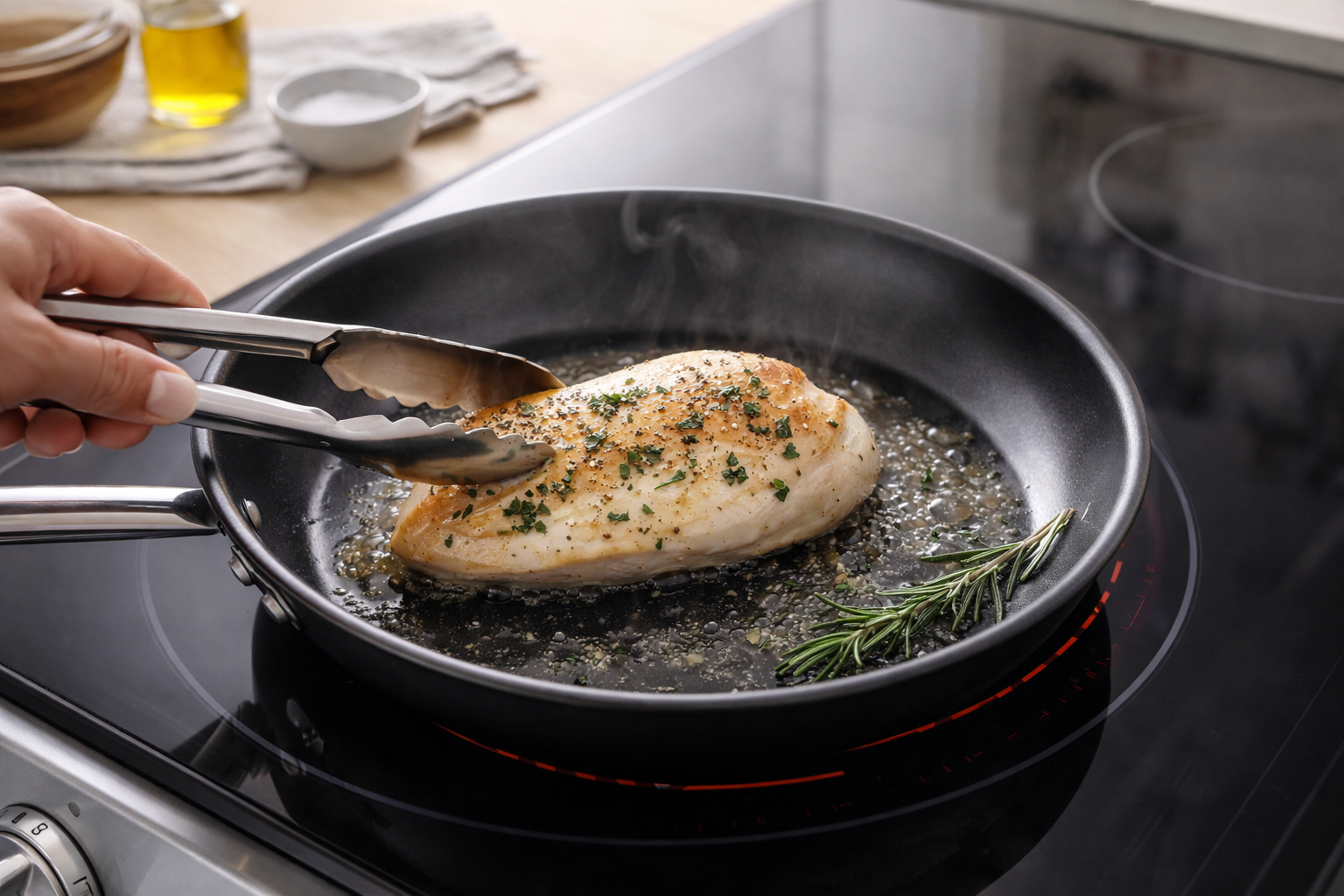
What Pans Work on Induction Stoves?
If you are new to induction cooking, cookware compatibility is the first hurdle. Induction stoves heat pans using magnetic energy rather than a heating element or flame. That means not every pan will work, even if it looks sturdy or high quality.
Here is a clear, practical guide to which pans work on induction stoves and why.
The Simple Rule: Magnetic Bottoms Only
For a pan to work on an induction stove, it must contain magnetic material in its base.
An easy test:
- Stick a magnet to the bottom of the pan.
- If it sticks firmly, the pan will work on induction.
- If it does not stick, it will not heat.
This test is more reliable than labels or brand names.
Pans That Work on Induction
Cast Iron
Cast iron is one of the best materials for induction cooking.
Why it works well:
- Naturally magnetic
- Excellent heat retention
- Performs consistently on induction surfaces
Things to watch:
- Heavy weight
- Rough bottoms can scratch glass cooktops if dragged
Enameled cast iron works just as well and is easier to maintain.
Carbon Steel
Carbon steel behaves similarly to cast iron but is lighter and smoother.
Why people like it:
- Magnetic and induction friendly
- Heats quickly
- Great for searing, stir frying, and everyday cooking
It does require seasoning, just like cast iron.
Stainless Steel (Magnetic Grades)
Not all stainless steel works on induction, but many do.
What to look for:
- Magnetic stainless steel bases
- Multi layer or clad construction with a magnetic core
Most modern stainless cookware sets labeled “induction compatible” fall into this category.
Induction Ready Nonstick
Many nonstick pans are now made with magnetic bases.
Good to know:
- Performance depends on the base, not the coating
- Look for clear induction compatibility markings
Avoid overheating nonstick pans, since induction heats very fast.
(See also: How to Tell if Your Pan is Induction Compatable)
Pans That Do NOT Work on Induction
Aluminum (Most Types)
Pure aluminum is not magnetic and will not heat on induction.
Exception:
- Aluminum pans with a bonded magnetic base may work
If there is no magnetic layer, aluminum will not function on induction.
Copper
Copper cookware does not work unless it has a magnetic stainless steel layer added to the base.
Pure copper pans will not heat at all on induction.
Glass, Ceramic, and Clay
These materials are non magnetic and incompatible with induction cooking.
They can sit on the cooktop but will not heat.
How to Identify Induction Compatible Cookware
Look for:
- The word “Induction” on packaging
- A coil or zigzag symbol on the bottom of the pan
- Manufacturer descriptions stating induction compatibility
When in doubt, use the magnet test.
Does Pan Size Matter?
Yes. Induction burners detect the size of the magnetic surface.
Tips:
- Use pans that closely match the burner size
- Very small pans may not be detected
- Warped bottoms can reduce efficiency or cause the burner to shut off
Flat bottoms matter more on induction than on gas or electric.
Final Thoughts
Induction cooking is fast, efficient, and precise, but it demands the right cookware. Cast iron, carbon steel, and magnetic stainless steel are your safest bets. Aluminum, copper, and glass usually will not work unless specially designed for induction.
If you are replacing cookware, you do not need to replace everything at once. Start with your most used pan, test what you already own, and build from there.