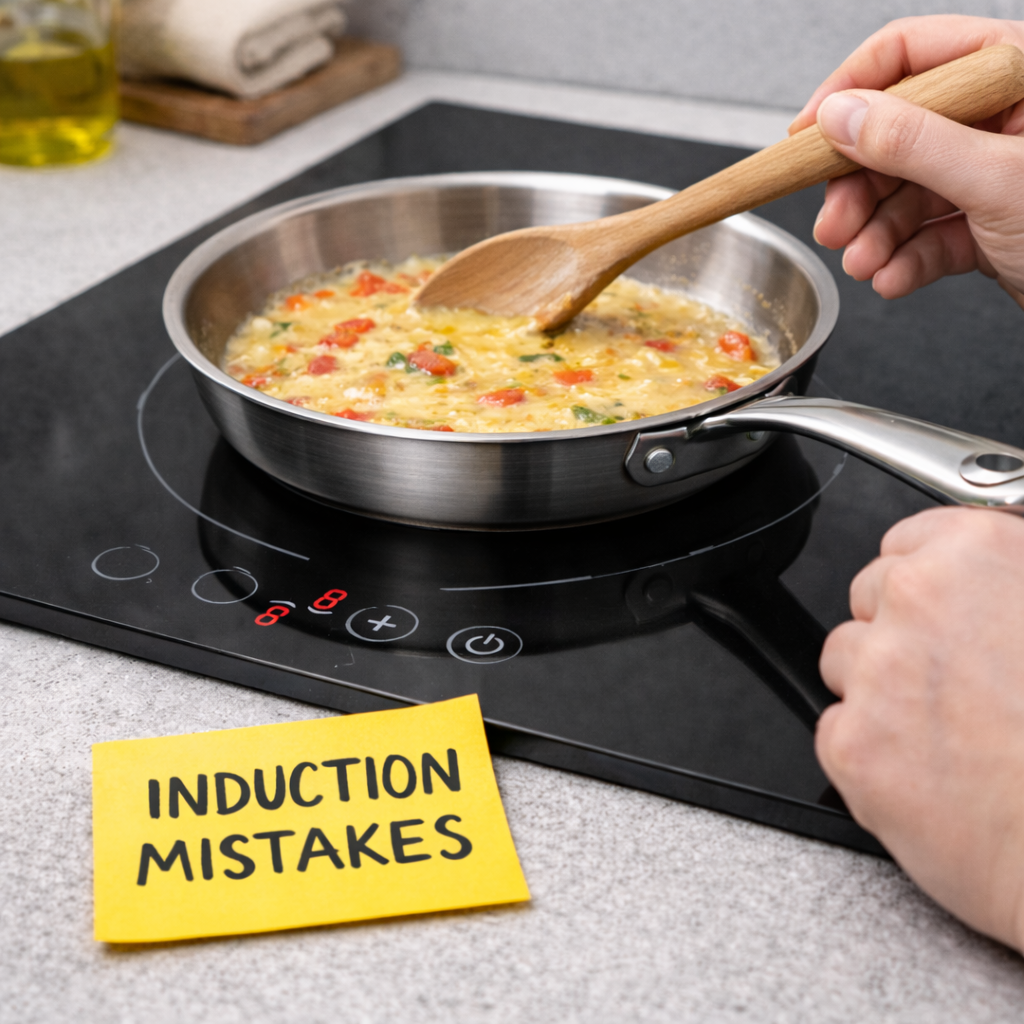
Cooking pancakes on an induction stove is fast, consistent, and surprisingly forgiving once you understand how induction heat behaves. Because induction heats the pan directly rather than the air around it, you get precise temperature control and even browning. That makes it ideal for pancakes, which depend on steady heat more than high heat.
Here is a simple, reliable approach that works whether it is a slow weekend breakfast or a quick weekday morning.
What You Need
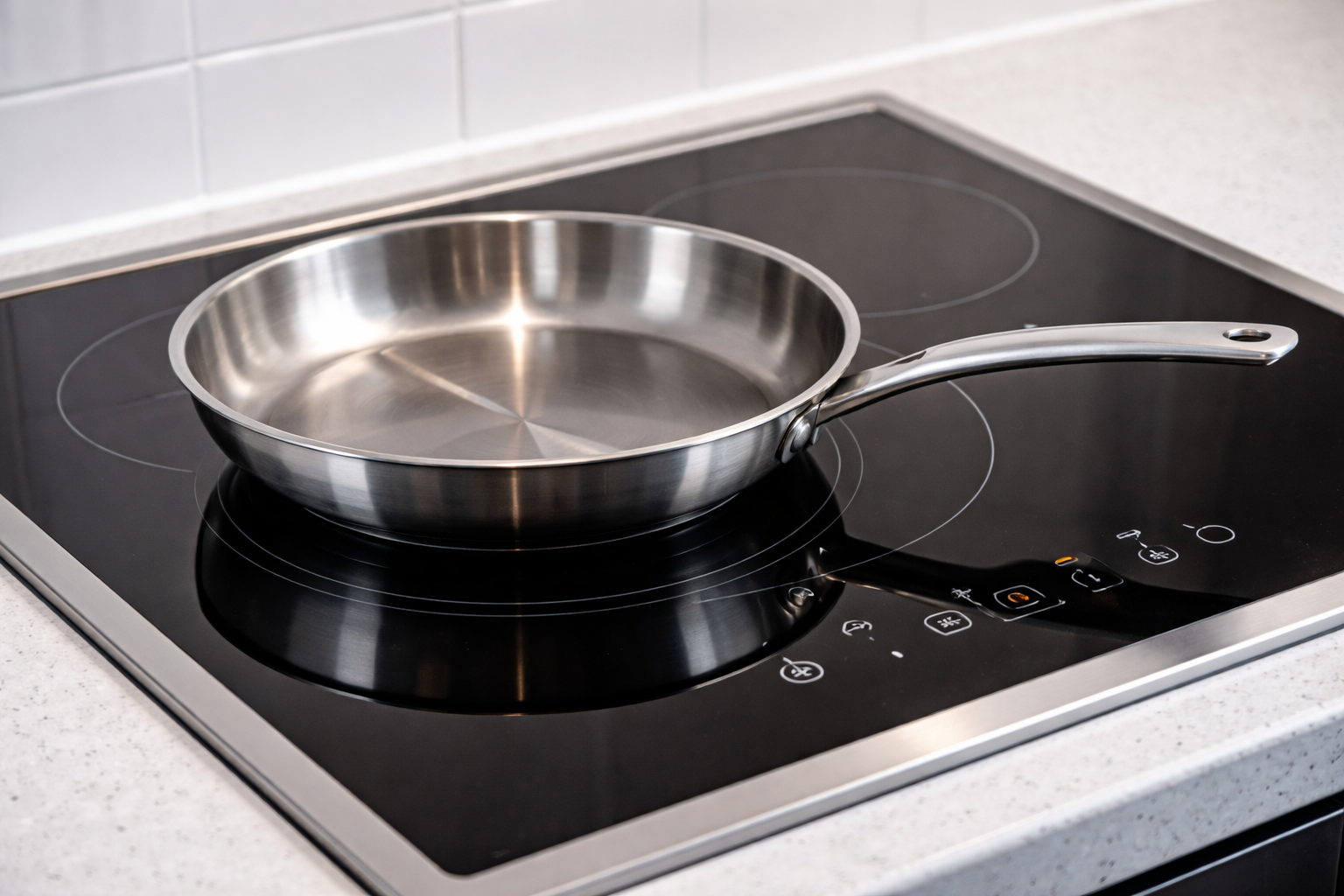
Pan
- A flat-bottomed induction-compatible skillet or griddle
- Cast iron, carbon steel, or induction-ready nonstick all work well
- Avoid warped pans since induction needs full contact with the surface
Basic Pancake Batter
- 1 cup flour
- 2 tablespoons sugar
- 2 teaspoons baking powder
- 1 pinch salt
- 1 cup milk
- 1 egg
- 2 tablespoons melted butter or oil
But hey… you can use any pancake recipe you like. Induction does not require special ingredients.
Step 1: Preheat the Pan Slowly
Induction heats quickly, which is great, but pancakes prefer patience.
- Place the pan on the induction cooktop.
- Set the heat to medium or medium-low.
- Let the pan preheat for about 2 minutes.
If your cooktop uses numbers, this is often around 4 to 6 out of 10. Starting too hot is the most common mistake.
Tip: Sprinkle a few drops of water on the pan. They should gently sizzle and evaporate, not explode or disappear instantly.
Step 2: Lightly Grease the Pan
Add a small amount of butter or oil and wipe it around with a paper towel. You want a thin, even coating rather than pools of fat.
Induction responds instantly, so butter can brown quickly. If it starts to smoke, lower the heat and let the pan cool for a moment.
Step 3: Pour the Batter
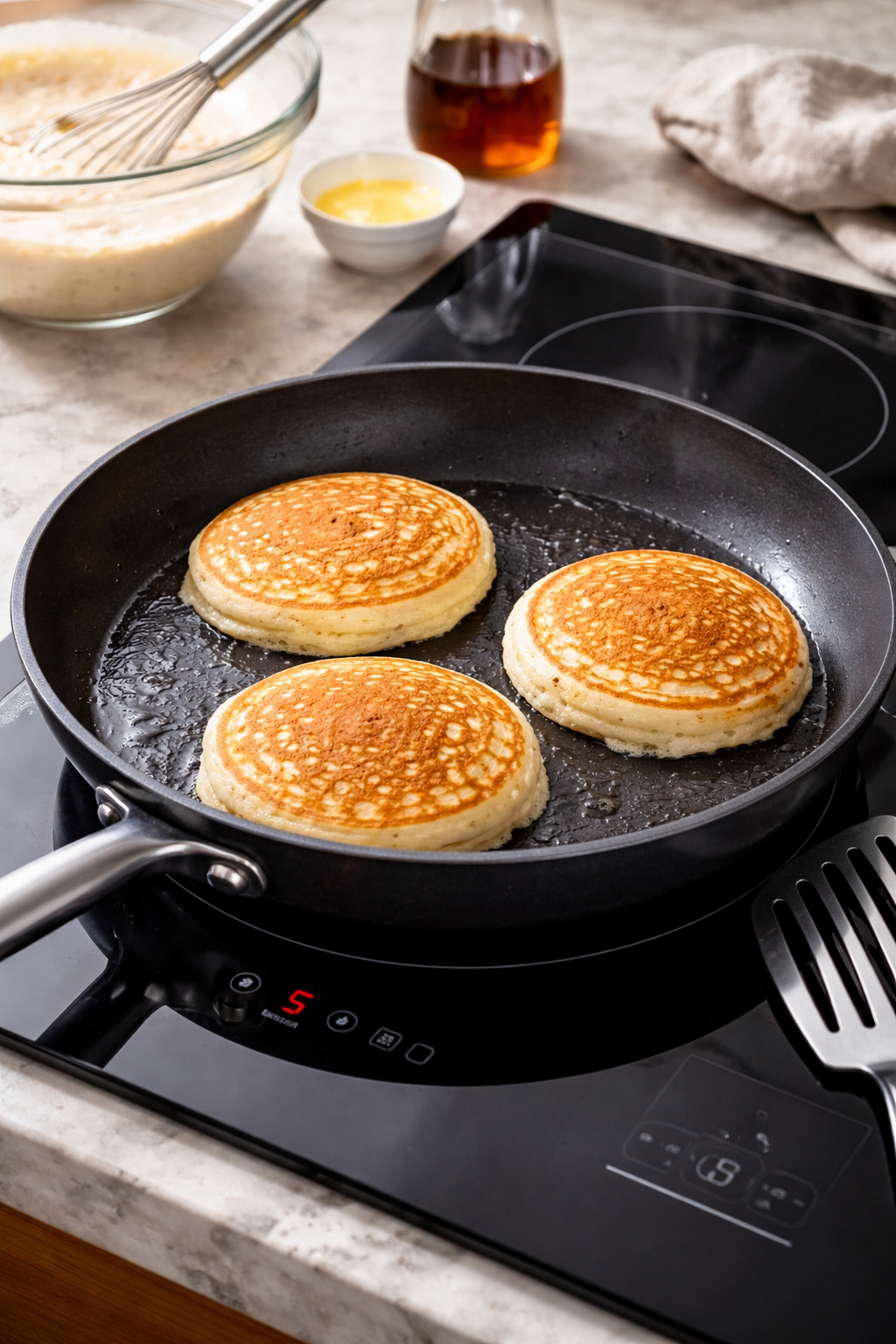
Pour about 1/4 cup of batter per pancake onto the pan.
Because induction maintains heat so well, you should hear a soft sizzle. Loud sizzling means the pan is too hot.
Leave space between pancakes so heat stays even.
Step 4: Watch for Visual Cues
Pancakes tell you when they are ready to flip.
Look for:
- Bubbles forming across the surface
- Edges that look slightly dry and set
- A golden brown underside when you peek
This usually takes 1 to 2 minutes on induction.
Flip once. Pancakes only need one flip.
Step 5: Finish and Adjust Heat as Needed
Cook the second side for about 30 to 60 seconds.
After the first batch, you may need to lower the heat slightly. Induction pans retain heat efficiently, especially cast iron, so later batches often cook faster.
Between batches:
- Re-grease lightly if needed
- Adjust heat rather than rushing the process
Common Induction Pancake Problems and Fixes
Too dark on the outside, raw inside
- Heat is too high
- Lower the setting and give the pan time to stabilize
Uneven browning
- Pan is not fully flat
- Rotate the pan slightly between batches if needed
Sticking
- Pan is not hot enough or not properly greased
- Increase heat slightly or add a thin layer of fat
Why Induction Is Great for Pancakes
- Precise temperature control means fewer burned batches
- Fast response lets you adjust instantly
- Even heating produces consistent golden color
- Safer cooking with no open flame
Once you dial in your preferred setting, induction becomes one of the most reliable ways to make pancakes.
Final Thought
The key to pancakes on an induction stove is restraint. Medium heat, a good pan, and paying attention to visual cues will give you fluffy centers and perfectly browned edges every time.
If you are new to induction cooking, pancakes are an excellent place to start.