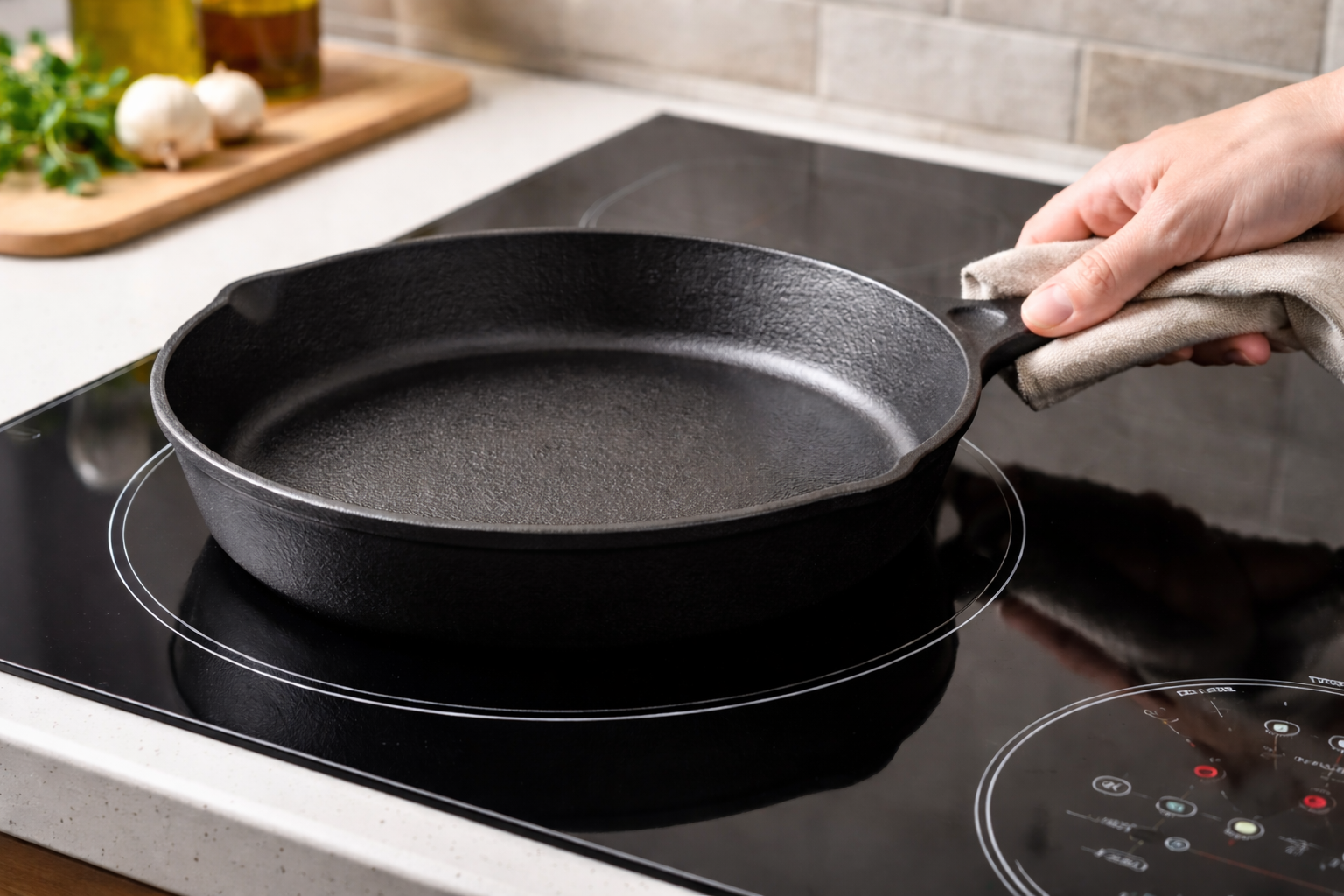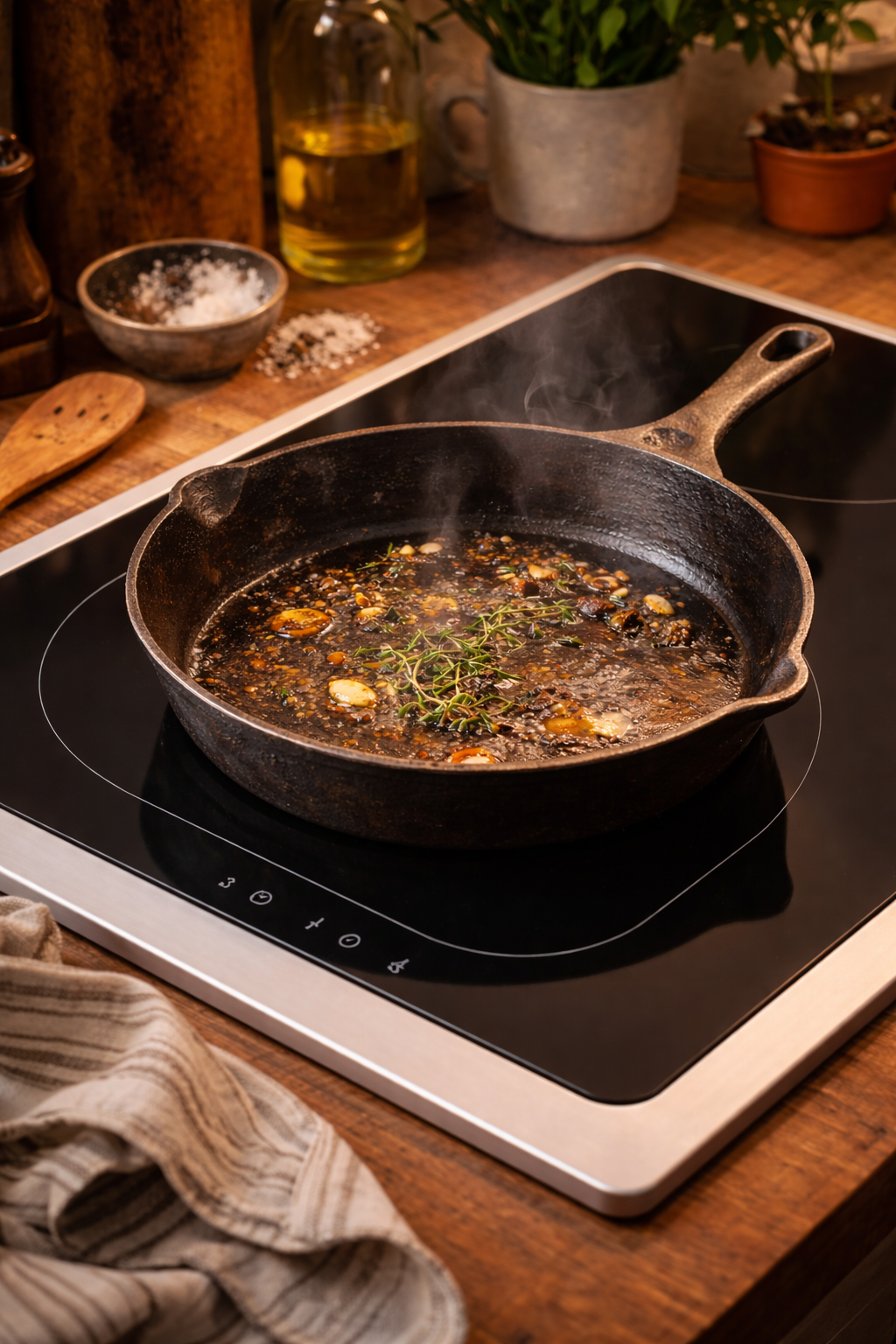
If you have ever cooked on an induction stove and reached for a cast iron pan, you probably noticed something right away. It just works. Fast. Even. Predictable. There is a reason that pairing feels almost magical.
In our kitchen, the star is a cast iron pan that is about 70 years old. My wife got it from her grandmother, and it has become our go-to for just about everything. Eggs, beans, vegetables, steaks, even cornbread. It has stories in it, seasoning built up over decades, and now it happens to be a perfect match for modern induction cooking.
Induction Loves Magnetic Metal
Induction stoves work by creating a magnetic field that directly heats the pan itself. Cast iron is highly magnetic, which makes it almost the ideal material.
When you turn on the burner, the pan starts heating immediately. There is no waiting for a coil to glow or a glass surface to slowly warm up. The energy goes straight into the cast iron.
That direct connection is why cast iron feels so responsive on induction. You adjust the power and the pan reacts right away.
Incredible Heat Retention Meets Precise Control
Cast iron is famous for holding heat. Once it gets hot, it stays hot. That is great for searing, browning, and cooking food evenly.
Induction adds something cast iron has never had before. Precision.
You get the steady, forgiving heat of cast iron combined with the fine control of induction. Lower the setting and the pan cools down faster than it would on gas or electric. Turn it up and you are back to a strong, even heat in seconds.
This combination makes it easier to avoid scorching while still getting that deep, satisfying cook.
Flat Bottoms Matter and Cast Iron Delivers
Induction cooktops need good contact between the pan and the glass surface. Many older or thinner pans warp over time and lose that flat base.
Cast iron, especially older pieces, tends to stay flat and solid. That full contact helps the magnetic field work efficiently and evenly across the pan.
That old pan from your grandmother was built thick, heavy, and true. Turns out that is exactly what induction wants.
Built for a Lifetime, Then Another
One of the quiet joys of cooking with cast iron on induction is the sense of continuity. A pan that was used on wood stoves, gas burners, and electric coils now works beautifully on one of the most modern cooking technologies available.
There is something special about that. Induction feels new and high-tech. Cast iron feels timeless. Together, they bridge generations in a very literal way.
Every time you cook with that pan, you are not just making dinner. You are extending its story.
A Simple Rule of Thumb
If you are wondering whether a pan will work on induction, cast iron is almost always a yes.
Heavy. Magnetic. Flat. Durable.
And if it happens to come with 70 years of history and family memories, even better.
That is not just good cooking. That is good living.
Frequently Asked Questions About Cast Iron on Induction Cooktops
Can I use cast iron on an induction cooktop?
Yes. Cast iron works extremely well on induction cooktops because it is magnetic. The induction field activates immediately and heats the pan efficiently and evenly.
Do cast iron pans work on induction stoves?
They do. In fact, cast iron is one of the most reliable materials for induction cooking. If a magnet sticks to the bottom of the pan, it will work on an induction stove.
Is cast iron safe for induction cooktops?
Yes, with a little care. Cast iron is heavy, so lowering it gently onto the glass surface helps prevent scratches or cracks. Many people also use a thin silicone mat or parchment paper for extra protection.
Can cast iron scratch an induction cooktop?
It can if dragged or dropped. Cast iron has a rough surface and significant weight, so always lift the pan instead of sliding it. Used carefully, cast iron is safe for everyday induction cooking.
Does cast iron heat differently on induction?
Yes. Induction heats cast iron very quickly, sometimes faster than gas or electric. Starting at a lower power setting and letting the pan preheat gradually helps avoid overheating.
Can I use old or vintage cast iron on induction?
Absolutely. Older cast iron works just as well as new cast iron on induction, as long as the base is reasonably flat and magnetic. Many people prefer vintage cast iron because of its seasoning and heat retention.
(Read More: Is Cast Iron Safe for Induction Cooktops? Scratches, Weight, and Heat Explained)