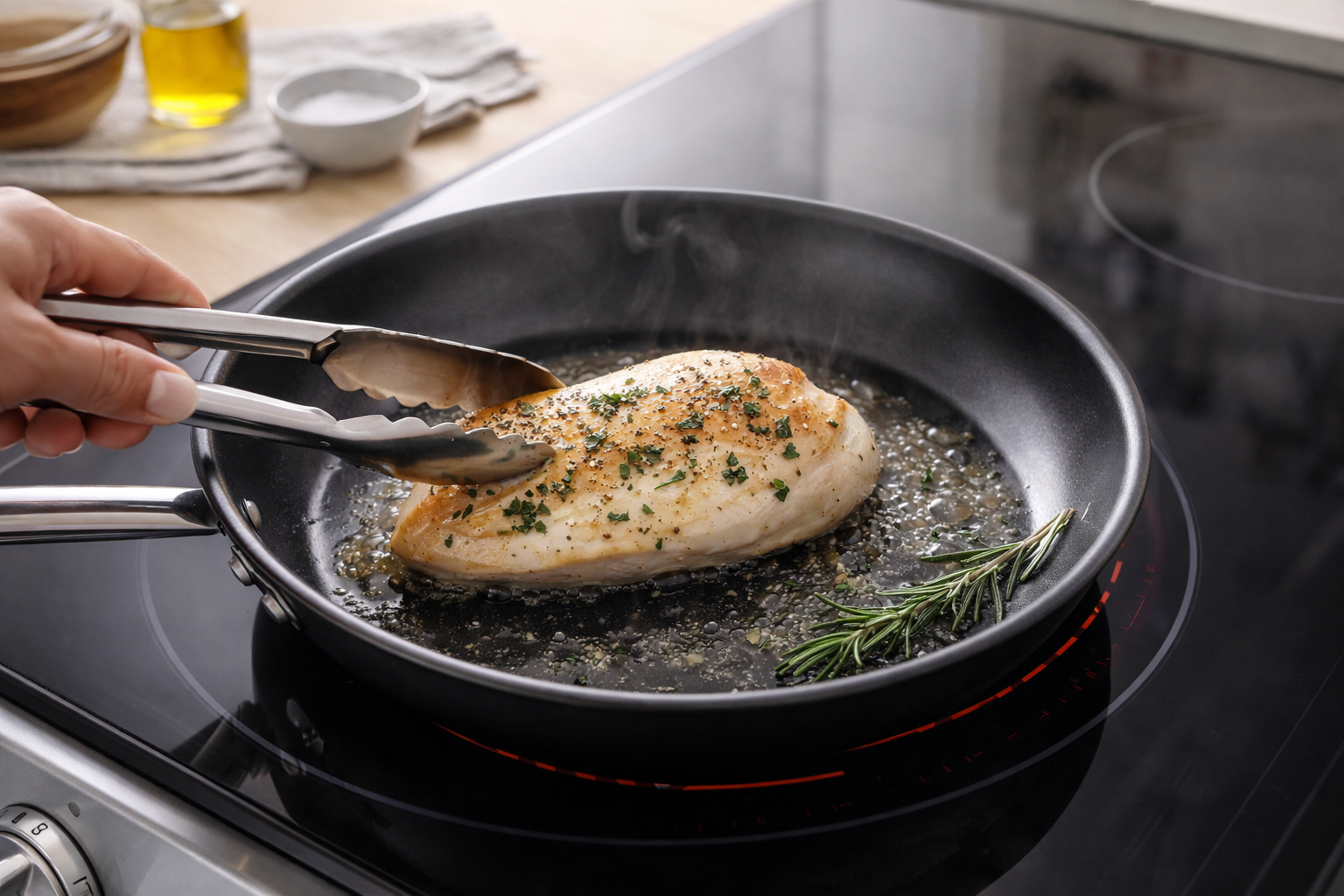
Induction cooking is one of those kitchen upgrades that quietly changes your habits. At first it feels unfamiliar. The heat reacts instantly. The numbers on the dial do not behave like gas or old electric ranges. Then, after a few weeks, it becomes hard to imagine going back.
Induction does not just cook faster. It teaches you to cook with intention.
Heat that responds as fast as you think
Traditional stoves heat the burner, then the pan, then the food. Induction skips the middle step. The pan becomes the heat source.
That means:
- Water boils quickly
- Lower settings actually stay low
- Adjustments take effect immediately
Once you trust that responsiveness, you stop chasing temperatures and start setting them.
Lower numbers do more work than you expect
One of the biggest mental shifts with induction is learning that the lower half of the dial does most of the cooking.
Where gas might need a medium flame, induction often needs a low to medium-low setting. Many foods that want steady heat, soups, grains, beans, sauces, live comfortably below the midpoint.
If something is boiling or sizzling aggressively, it is probably too hot.
Consistency beats brute force
Induction rewards patience. Because heat is so direct and even, food cooks more uniformly with less stirring and fewer hot spots.
This is especially noticeable when:
- Simmering soups or beans
- Cooking rice or grains
- Reducing sauces
- Holding food at a gentle temperature
Instead of bursts of heat, you get a calm, steady cook.
Your cookware matters more
Induction requires magnetic cookware, but beyond compatibility, quality becomes more noticeable.
Good cookware on induction:
- Heats evenly
- Holds temperature well
- Responds smoothly to small adjustments
Thin pans still work, but heavier stainless steel or enameled cast iron shine on induction. You feel the difference immediately.
A cleaner cooking experience
Because the cooktop itself does not get hot in the same way, spills are less likely to burn on. The surface cools quickly once the pan is removed.
This leads to:
- Easier cleanup
- Less lingering heat in the kitchen
- Fewer scorched messes
It also makes induction feel calmer and more controlled, especially during longer cooking sessions.
Learning to trust the quiet
Induction is quiet. There is no flame. No glowing coils. Often the only sound is a faint hum or the food itself.
At first, that silence can feel unsettling. Over time, it becomes reassuring. You learn to watch the food instead of the burner.
Cooking becomes more visual and tactile.
Induction favors intentional cooking
Induction does not reward rushing. It rewards knowing what your food needs and giving it just that.
Once you stop treating the dial like a gas knob and start treating it like a temperature control, induction becomes predictable and forgiving.
It is less about power and more about precision.
And once that clicks, induction stops feeling like new technology and starts feeling like the way cooking was always meant to be.