If you recently switched to an induction cooktop and everything suddenly feels too hot, too fast, or hard to control, you are not imagining it.
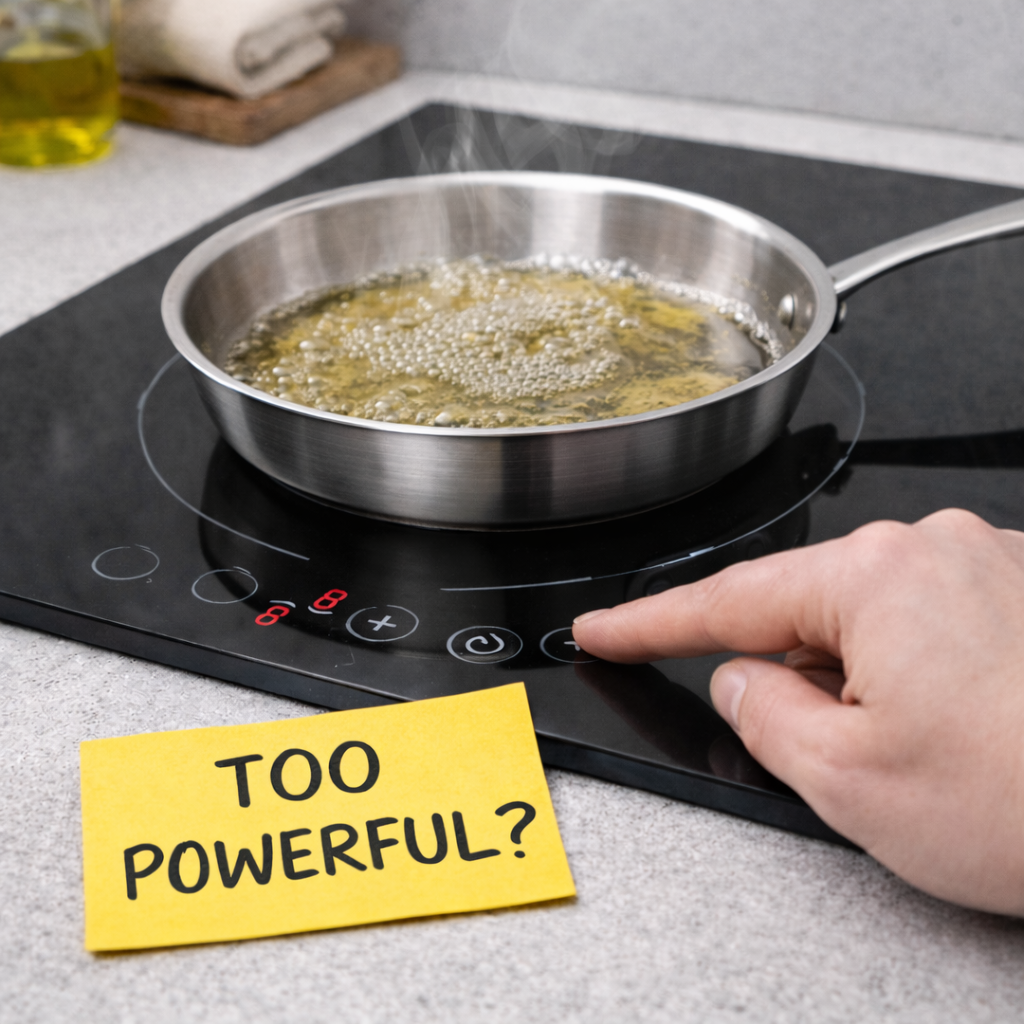
Many people feel that induction cooking is too powerful at first, especially when coming from gas or traditional electric stoves. What feels overwhelming early on is usually just a different kind of responsiveness.
Once you understand why induction feels intense and how to adjust your habits, it becomes far easier to manage.
The short answer
Induction cooking feels powerful because it transfers energy directly into the pan instead of heating the air or the glass surface. That efficiency means faster response and less margin for error at first.
The main reasons it feels so strong are:
- Direct energy transfer into the pan
- Faster temperature response than gas or electric
- Lightweight cookware overheating quickly
The good news is that a few small changes make a big difference.
Why induction feels so intense at first
With gas or electric stoves, much of the heat is lost before it reaches your food. Induction skips that step.
Instead of heating a burner that then heats a pan, induction heats the pan itself. That direct energy transfer makes temperature changes happen almost instantly.
What feels like too much heat is usually just faster feedback than you are used to.
(Read More: How induction cooking works)
Power levels on induction are not the same as gas
A common mistake is treating induction power levels like gas flame levels.
On induction:
- Medium is often plenty
- High is usually only for boiling or searing
- Maximum power is rarely needed
Many people overshoot simply because they are using familiar numbers with unfamiliar behavior.
What to do instead
Start one or two levels lower than you think you need. Increase gradually and watch how the pan responds.
Pan choice affects control more than you think
The pan plays a huge role in how controllable induction feels.
Lightweight or thin pans heat extremely quickly, which can feel jumpy or unforgiving. Heavier pans absorb and distribute heat more evenly, making temperature changes feel smoother.
If induction feels wild, the pan is often the culprit.
[Internal link: How to tell if your pan is induction compatible]
Preheating works differently on induction
With gas or electric stoves, long preheating is common. On induction, preheating happens much faster.
Leaving an empty pan on high power can lead to:
- Overheated cookware
- Sudden temperature spikes
- Safety shutoffs
What to do instead
Preheat briefly at a moderate level. Add oil or food sooner than you would on other stoves.
Why simmering feels tricky at first
Simmering on induction often feels harder because many cooktops regulate low heat by pulsing power rather than delivering a constant low output.
That pulsing can feel inconsistent, even though the average temperature is correct.
What to do instead
- Use heavier pans
- Lower the power more than you expect
- Give the cooktop time to settle into a rhythm
(Read more: Why does my induction cooktop make clicking or buzzing noises?)
Small habits that improve control immediately
If induction feels overwhelming, these adjustments help quickly:
- Start at lower power levels
- Use heavier cookware with flat bases
- Match pan size to burner size
- Make fewer sudden power changes
- Move pans less during cooking
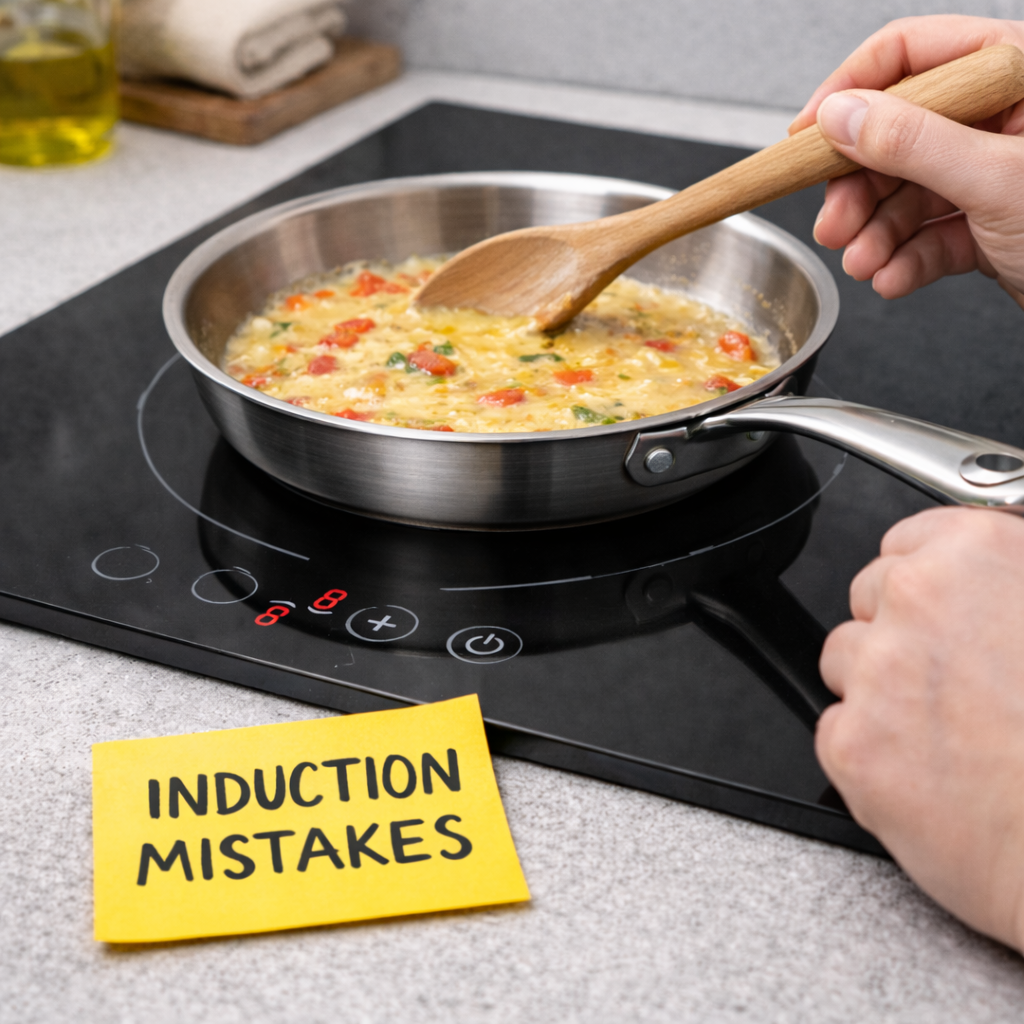
Many of these habits overlap with common induction cooking mistakes beginners make, and correcting them usually solves multiple issues at once.
When induction becomes an advantage
Once you adapt, induction’s responsiveness becomes a strength rather than a drawback.
You gain:
- Faster boiling
- Precise temperature changes
- Quicker recovery after adding food
- Less residual heat
What once felt unforgiving often becomes confidence-building.
The bottom line
Induction cooking feels powerful because it is efficient and responsive, not because it is uncontrollable.
With a few adjustments to cookware, power levels, and expectations, induction becomes predictable, precise, and easier to manage than many people expect.
If induction has felt like too much so far, that phase usually passes quickly.