Cooking rice on an induction stove is easy once you understand how quickly induction heat responds. If you are used to gas or electric, the biggest adjustment is lowering the heat sooner than you expect. After a few tries, induction becomes one of the most reliable ways to cook rice on the stovetop.
The Short Answer
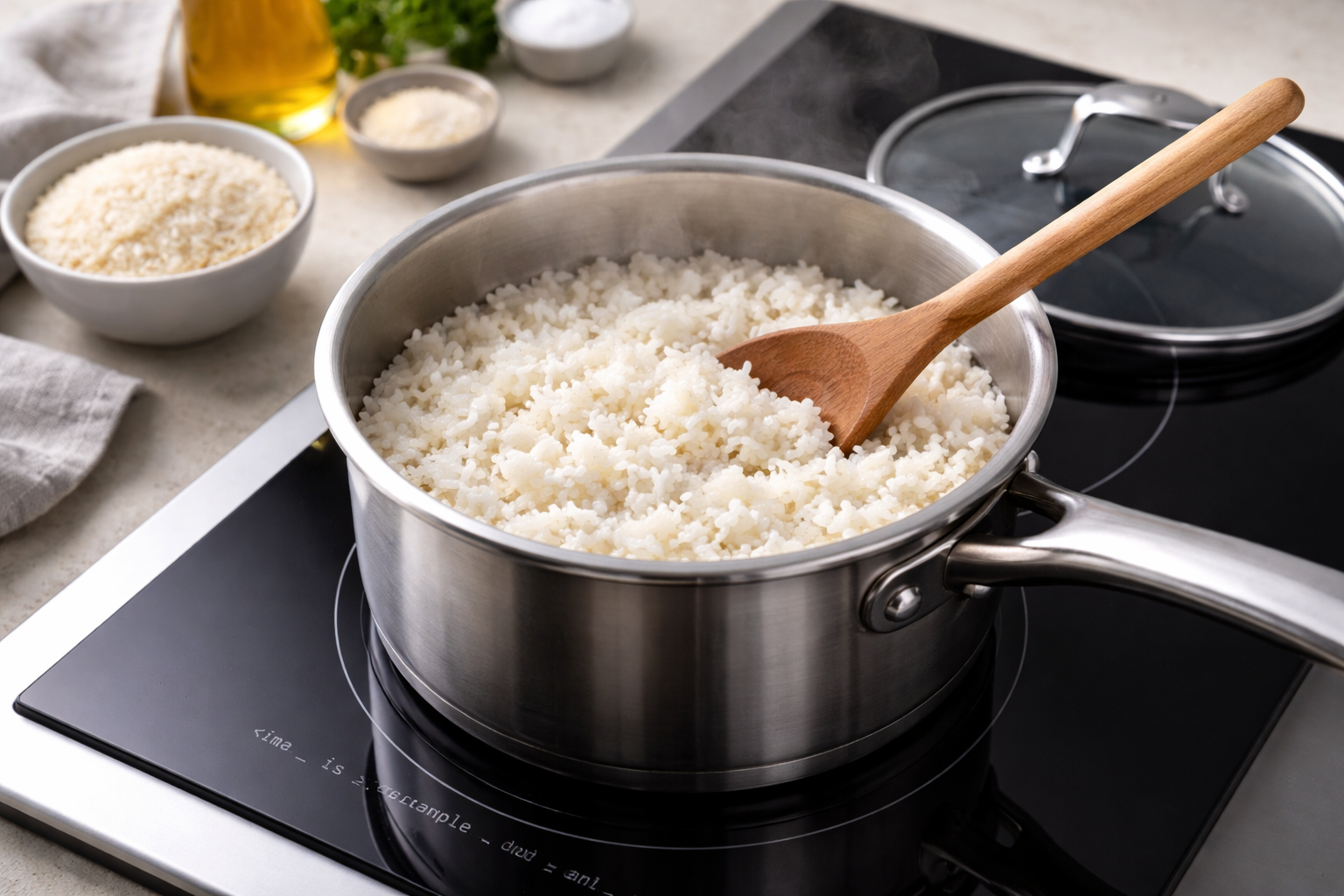
Yes, rice works perfectly on an induction stove. The key is bringing the water to a boil, then immediately reducing the heat to maintain a gentle simmer. Induction heats fast and cools down instantly, so timing matters more than with traditional burners.
Quick takeaway: Bring rice to a boil, lower the heat right away, then let it simmer gently until done.
A Simple Method for White Rice
This method works well for white rice, jasmine rice, and basmati rice.
- Rinse 1 cup of rice until the water runs mostly clear.
- Add the rice and 2 cups of water to a saucepan with a tight-fitting lid.
- Set the induction burner to medium high and bring the water to a rolling boil.
- As soon as it boils, reduce the heat to low.
- Cover and simmer for 15 to 18 minutes.
- Turn off the burner and let the rice sit covered for 5 minutes.
- Fluff with a fork before serving.
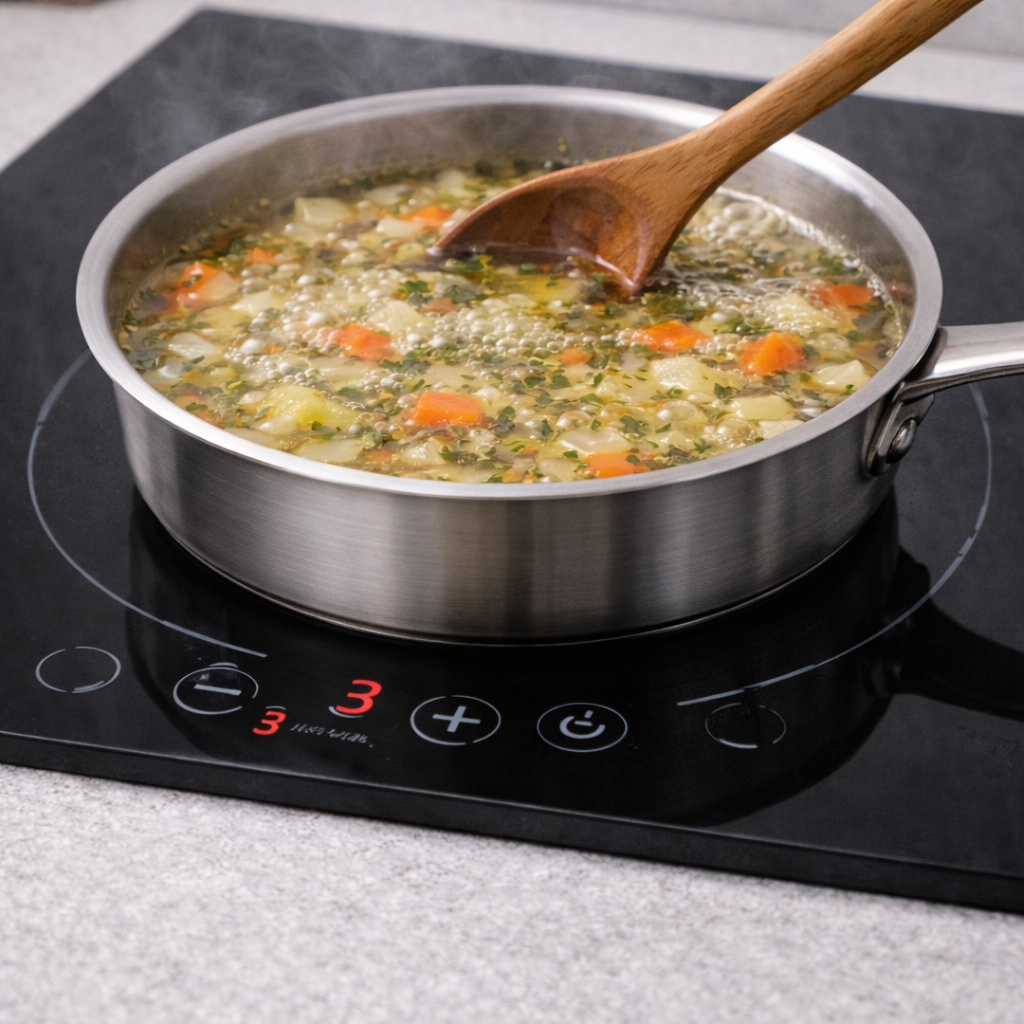
On many induction stoves, low heat is around level 2 or 3, but every model is different.
Why Induction Feels Different When Cooking Rice
Induction does not hold heat the way electric burners do. When you lower the power, the heat drops immediately. This gives you excellent control, but it also means rice can burn or boil over if the heat stays too high for too long.
Stay nearby while the water comes to a boil so you can lower the heat right away.
Common Problems and How to Avoid Them
These are the most common issues people run into when cooking rice on induction.
- Boil overs happen because induction reaches full heat quickly. Reduce the heat as soon as boiling starts.
- Burned rice usually means the simmer setting was too high.
- Too much bubbling means the power level is still higher than needed. Lower it one more step.
If you are unsure, it is better to use slightly lower heat and let the rice cook a bit longer.
The Best Pan for Cooking Rice on Induction
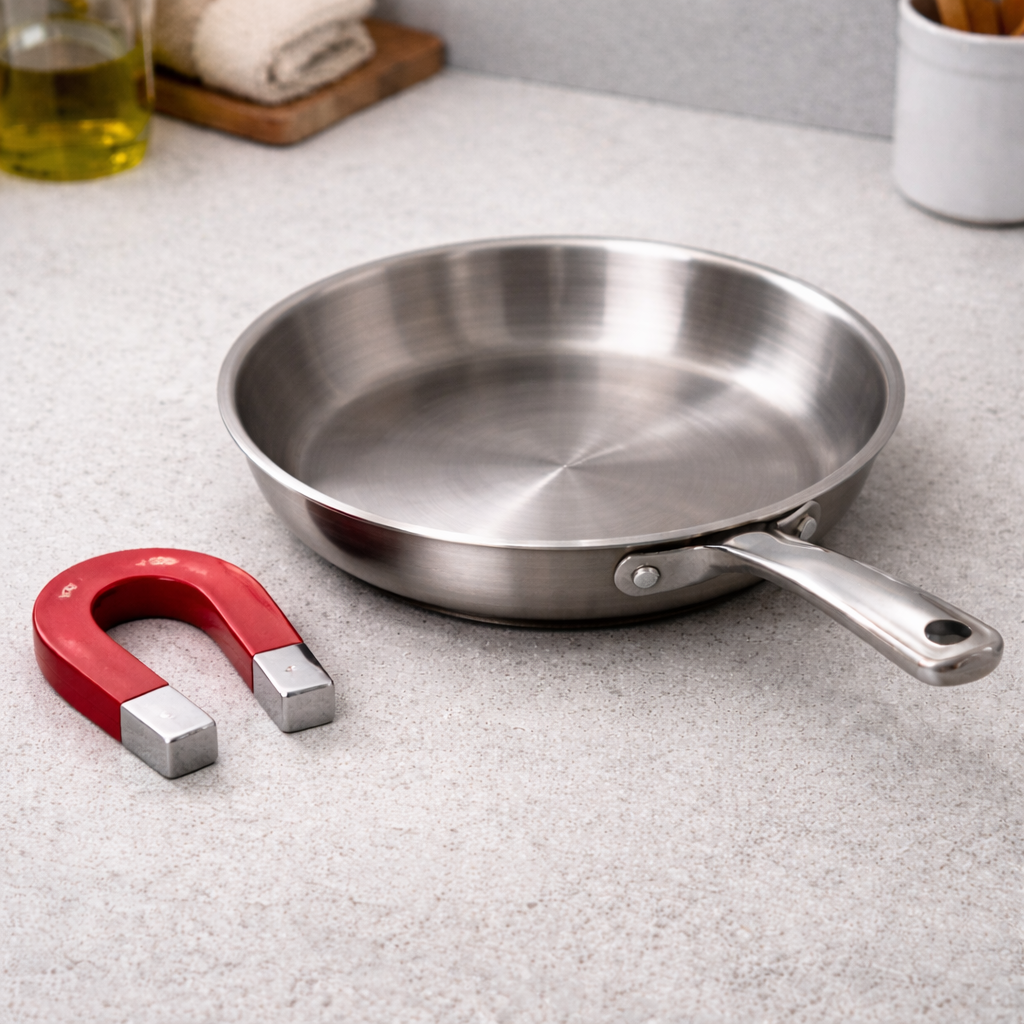
A heavy-bottomed saucepan works best. Thicker pans heat more evenly and reduce the chance of scorching.
(Read more: What pans work on induction stoves)
Cooking Brown Rice on an Induction Stove
Brown rice takes longer and needs more water.
- Use 1 cup of brown rice and 2½ cups of water
- Bring to a boil, then reduce heat immediately
- Simmer for 40 to 45 minutes
- Let rest covered for 10 minutes before fluffing
The same induction principles apply. Fast boil, quick heat reduction, gentle simmer.
Helpful Tips for Better Results
- Use a lid that fits tightly to prevent excess moisture loss
- Lower the heat earlier than you would on an electric stove
- If your rice starts sticking, reduce the heat and add a tablespoon or two of water
Final Thoughts
Induction stoves offer precise control that works very well for rice once you adjust your timing. The fast response can feel different at first, but it quickly becomes an advantage. After a few batches, cooking rice on induction will feel simple and predictable.
Rice is also a great way to learn how your induction stove behaves at different power levels.