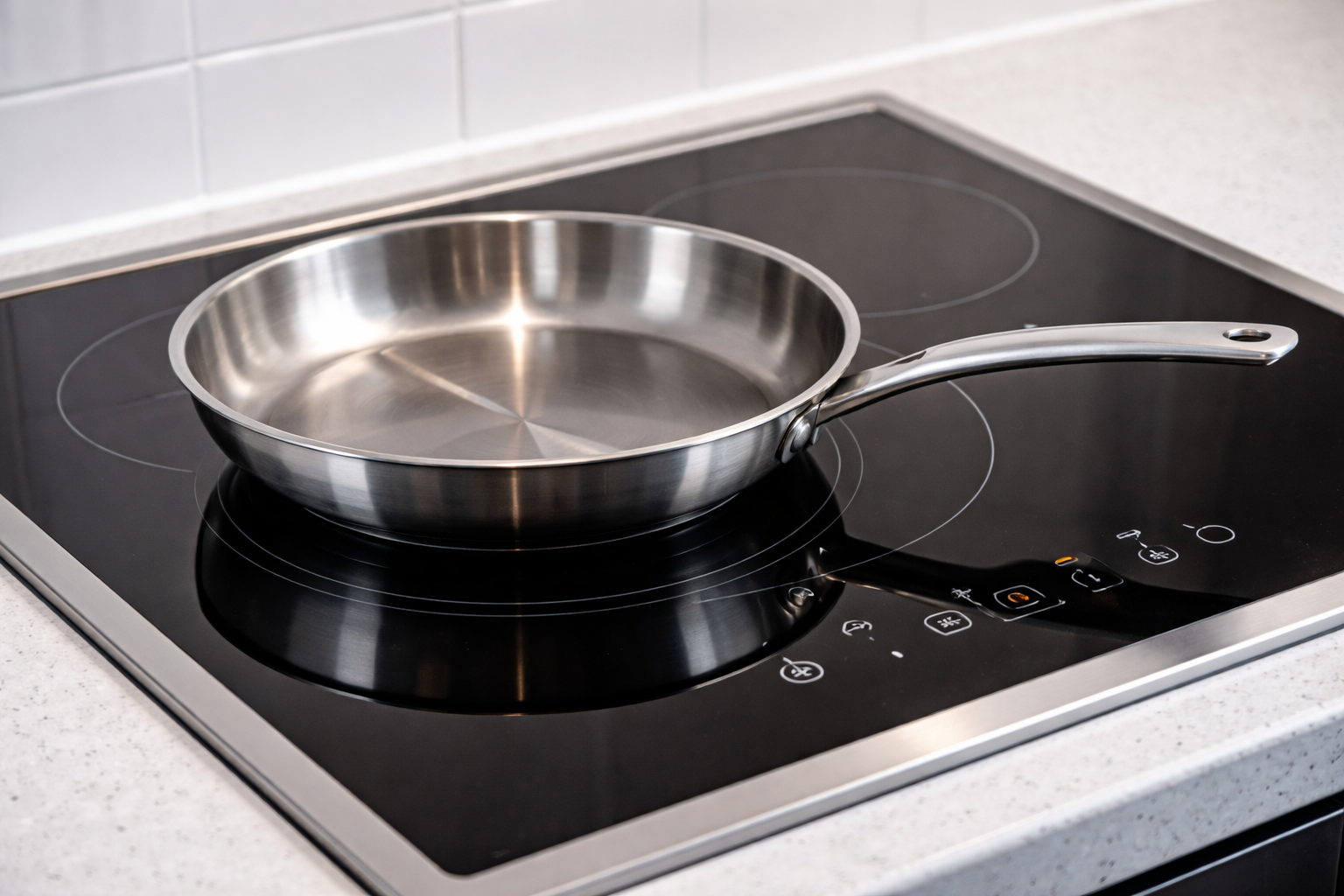
If you are new to induction cooking, you might notice something unexpected. You place a pan on the cooktop, the stove is turned off, and yet you hear a soft clicking sound every second or two.
This clicking noise from an induction cooktop when it’s off is a common and usually harmless behavior.
At first, it can feel concerning. Is the stove turning on by itself? Is the pan heating? Is something wrong?
In most cases, the answer is no.
The short answer
Many induction cooktops stay lightly active even when they are off. When a pan is sitting on the surface, the cooktop periodically checks whether cookware is present and compatible. That brief check can create a faint clicking sound.
No heat is being produced, and the pan is not warming up.
Why an induction cooktop clicks when it’s off
Induction cooking relies on sensing metal beneath the glass surface. To do this, the cooktop uses internal electronics that briefly activate to detect cookware.
When a pan is on the surface, the cooktop:
- Sends a very small signal to detect metal
- Confirms the pan is magnetic and properly positioned
- Turns the signal off and checks again moments later
Each cycle can trigger a relay or electronic switch inside the unit. That switching action is the clicking sound you hear.
Because a pan is present, the induction cooktop keeps checking instead of going completely silent.
Why the clicking stops when you remove the pan
If the cooktop surface is empty, most induction stoves stop checking for cookware and remain quiet.
When a pan is left on the surface, the cooktop assumes you may be about to cook. It stays in a low power sensing mode, checking periodically to see if it should activate.
That is why:
- The clicking usually stops as soon as the pan is removed
- The sound repeats at regular intervals
- The cooktop surface stays cool
Does the pan heat up during this process?
No. During cookware detection, the induction cooktop is not sending enough energy to create heat.
You can safely touch the pan, move it, or leave it sitting there. The cooktop is sensing, not cooking.
Why some cookware makes the clicking more noticeable
Heavier cookware tends to make the clicking sound easier to hear.
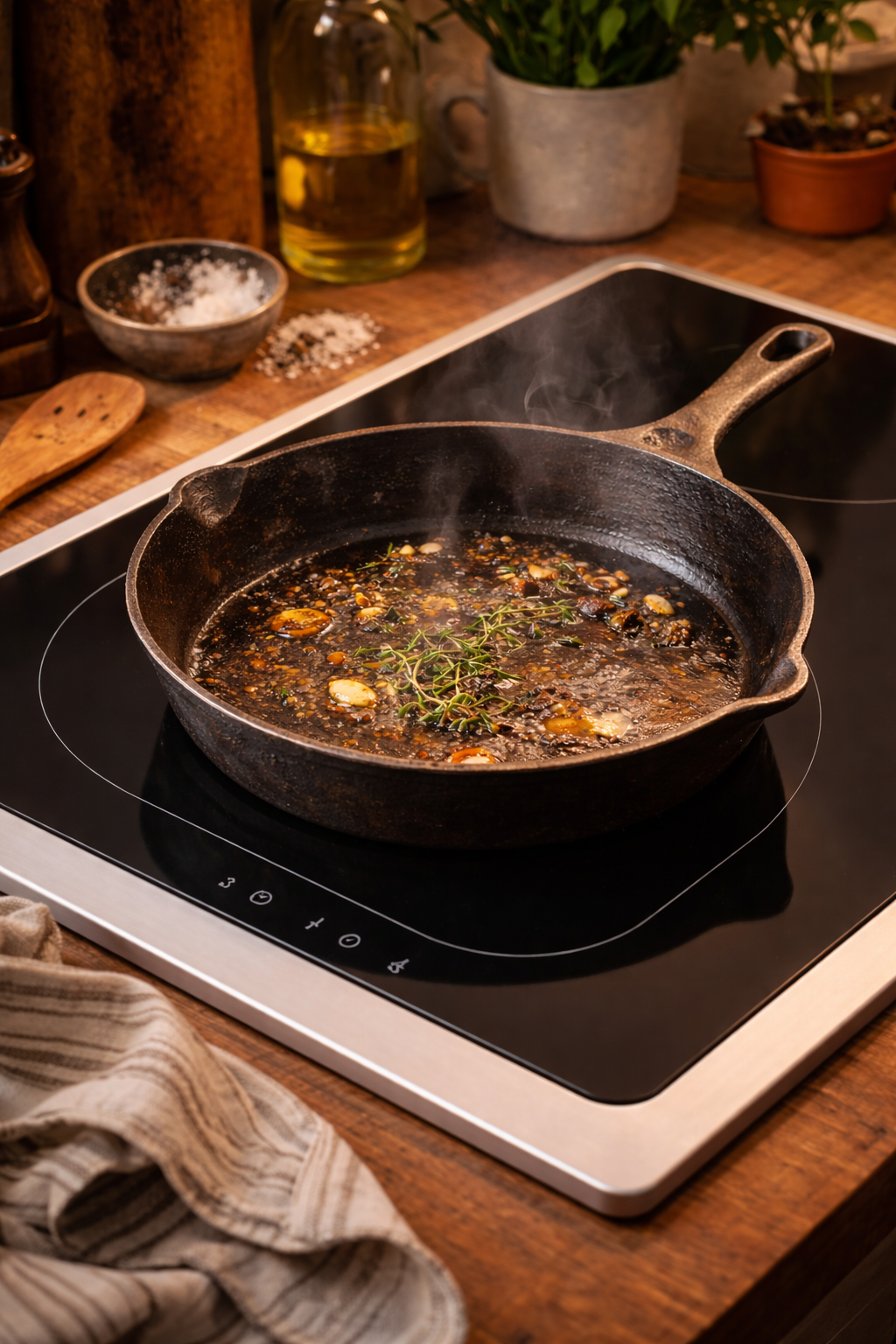
Cast iron, carbon steel, and thick stainless steel pans work very well on induction, but they can make the detection process more obvious. Lighter pans may still trigger clicking, but the sound is often quieter.
Different induction cooktop brands also use different internal components, so some models naturally produce louder clicks than others.
(Read more: What Pans Work on Induction Stoves)
When clicking could indicate a problem
A soft, steady click every second or two is usually normal.
You may want to investigate further if:
- The clicking is loud, irregular, or rapid
- The sound continues when no pan is on the cooktop
- The cooktop clicks while completely unplugged
- The surface becomes warm or displays error codes while off
These situations are uncommon and may point to a loose component or a failing relay.
How to stop an induction cooktop from clicking
If the sound bothers you, the fix is simple.
Remove the pan from the cooktop when you are not cooking. With no cookware to detect, most induction cooktops go completely quiet.
Frequently asked questions
Is it normal for an induction cooktop to click when off?
Yes. Many induction cooktops periodically check for cookware even when they are not actively cooking.
Does clicking mean the induction stove is using electricity?
Only a very small amount for sensing. It does not heat the pan and does not meaningfully impact energy use.
Can clicking damage the cooktop or cookware?
No. This sensing behavior is part of normal operation and does not harm the stove or the pan.
The bottom line
If your induction cooktop is clicking when off and a pan is sitting on the surface, it is usually normal.
The stove is staying aware, not turning on.
Once you understand what is happening, it becomes just another small quirk of induction cooking and one that does not affect safety, performance, or energy efficiency.