Cast iron works extremely well on induction cooktops, but many people hesitate to use it because induction surfaces are glass. The good news is that cast iron is safe for induction cooking when used with a little care. Understanding the risks and how to avoid them makes cast iron one of the most reliable options you can use.
Cast iron is safe for induction cooktops as long as it is handled carefully and used with appropriate heat settings.
Why cast iron works so well on induction
Induction cooktops heat cookware using a magnetic field. Cast iron is naturally magnetic, which means it responds immediately and efficiently to induction heat. This allows the pan to heat quickly, hold temperature well, and deliver consistent cooking results.
Because of this strong magnetic response, cast iron often performs better on induction than many stainless steel or multi-layer pans.
(Read More: Why Cast Iron is Perfect for Induction Cooking)
The main safety concern with induction cooktops
Most induction cooktops use a smooth glass surface. The concern is not heat, but weight and movement.
Cast iron is heavy and has a rougher surface than many other pans. Problems only occur when a pan is dragged across the surface or dropped forcefully onto the glass.
Used properly, cast iron does not damage induction cooktops.
Can cast iron scratch an induction cooktop?
Yes, it can if handled carelessly.
Scratches typically happen when:
- The pan is slid instead of lifted
- Grit or debris is trapped under the pan
- The pan is set down abruptly
To avoid scratches:
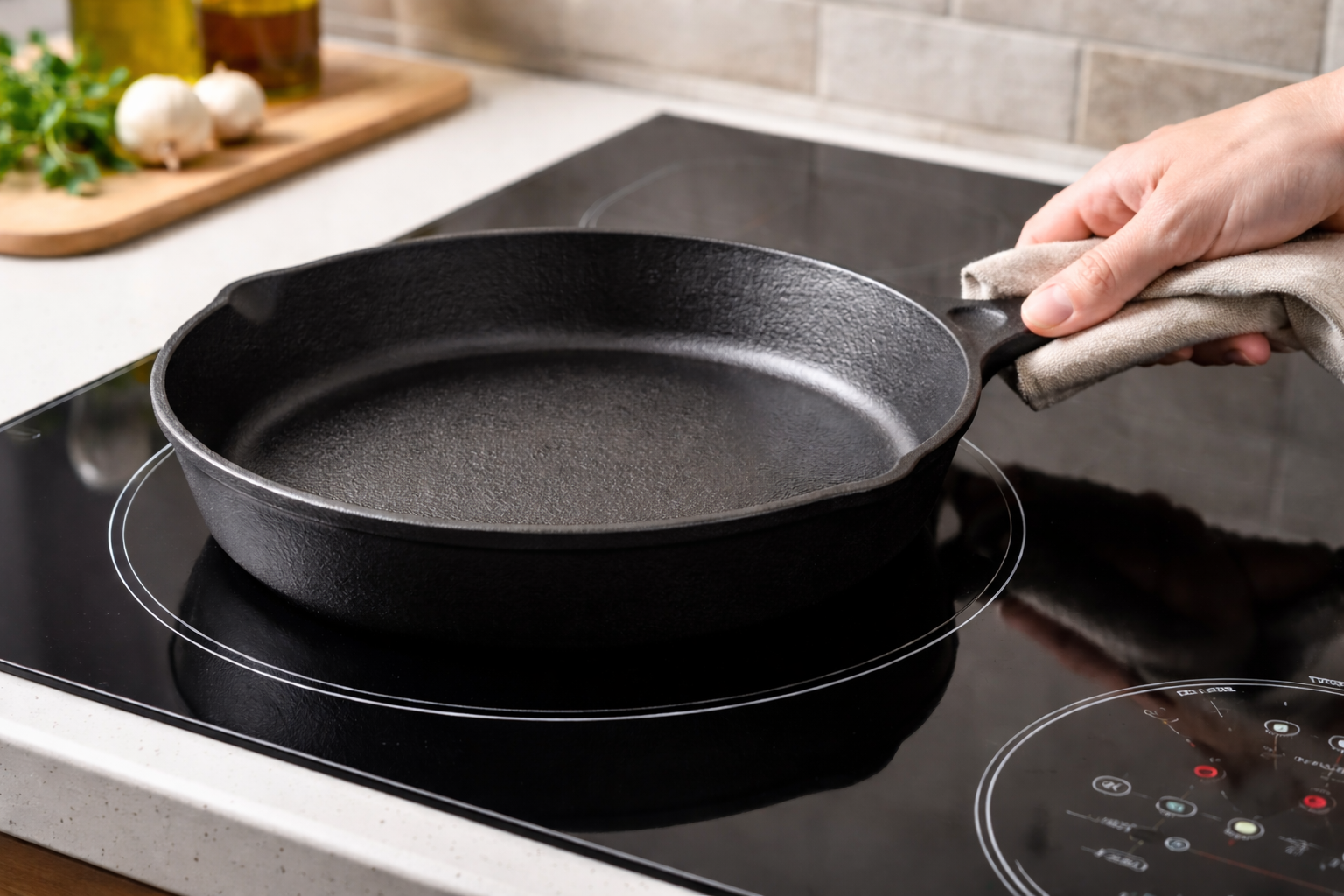
- Always lift cast iron instead of sliding it
- Make sure the cooktop and pan bottom are clean
- Lower the pan gently onto the surface
Some cooks place a thin silicone mat or a sheet of parchment paper between the pan and the cooktop for extra protection. This does not interfere with induction heating.
Can cast iron crack induction glass?
Cracking is rare and usually caused by impact, not heat.
Induction cooktops are designed to handle high temperatures, including those produced by cast iron. Cracks typically occur when a heavy pan is dropped or when excessive force is applied to a small area of the glass.
Lowering the pan carefully and avoiding sudden impacts eliminates this risk for most home cooks.
Does cast iron heat too fast on induction cooktops?
Cast iron heats very quickly on induction, sometimes faster than people expect. This can lead to overheating if the power level is set too high.
Best practices include:
- Starting at a lower power setting
- Allowing the pan to preheat gradually
- Avoiding maximum power unless boiling or searing intentionally
Once hot, cast iron retains heat extremely well, so lower settings are often sufficient.
Is enameled cast iron safer than bare cast iron?
Both are safe for induction cooktops.
Enameled cast iron has a smoother bottom, which some people prefer for glass surfaces. Bare cast iron works just as well but benefits from extra care when lifting and placing the pan.
The choice comes down to cooking style and maintenance preference, not safety.
What about vintage or older cast iron?
Older cast iron pans are safe for induction as long as the base is reasonably flat.
Very warped pans may heat unevenly or fail to make full contact with the induction surface. A simple test is to see whether the pan rocks when placed on the cooktop.
Many people successfully use decades-old cast iron on induction without issues.
Quick safety checklist
- Cast iron is safe for induction cooktops
- Lift pans instead of sliding them
- Start with lower heat settings
- Keep the cooktop surface clean
Bottom line
Cast iron is safe for induction cooktops and is one of the best-performing materials you can use. The key is handling it thoughtfully. Lift instead of slide, start with lower heat, and keep the surface clean.
If you want to understand why cast iron works so well with induction in the first place, see our full guide on using cast iron on induction cooktops.