One of the most confusing parts of switching to an induction cooktop is figuring out whether your existing pans will work. A pan might look solid, feel heavy, and still behave strangely on induction.
Many people ask how to tell if a pan is induction compatible before buying new cookware or blaming their cooktop. The good news is that you do not need special tools or technical knowledge to find out.
The short answer
Induction cooktops only work with pans that are magnetic. If a pan cannot interact with the magnetic field, the burner will not heat properly or may not turn on at all.
A pan is induction compatible if it is magnetic and can be detected consistently by an induction burner. Non-magnetic cookware will not heat on induction stoves.
Even when a pan technically works, its construction still affects how well it performs.
Below are three simple tests you can do at home.
Test 1: The magnet test
This is the fastest and most common check.
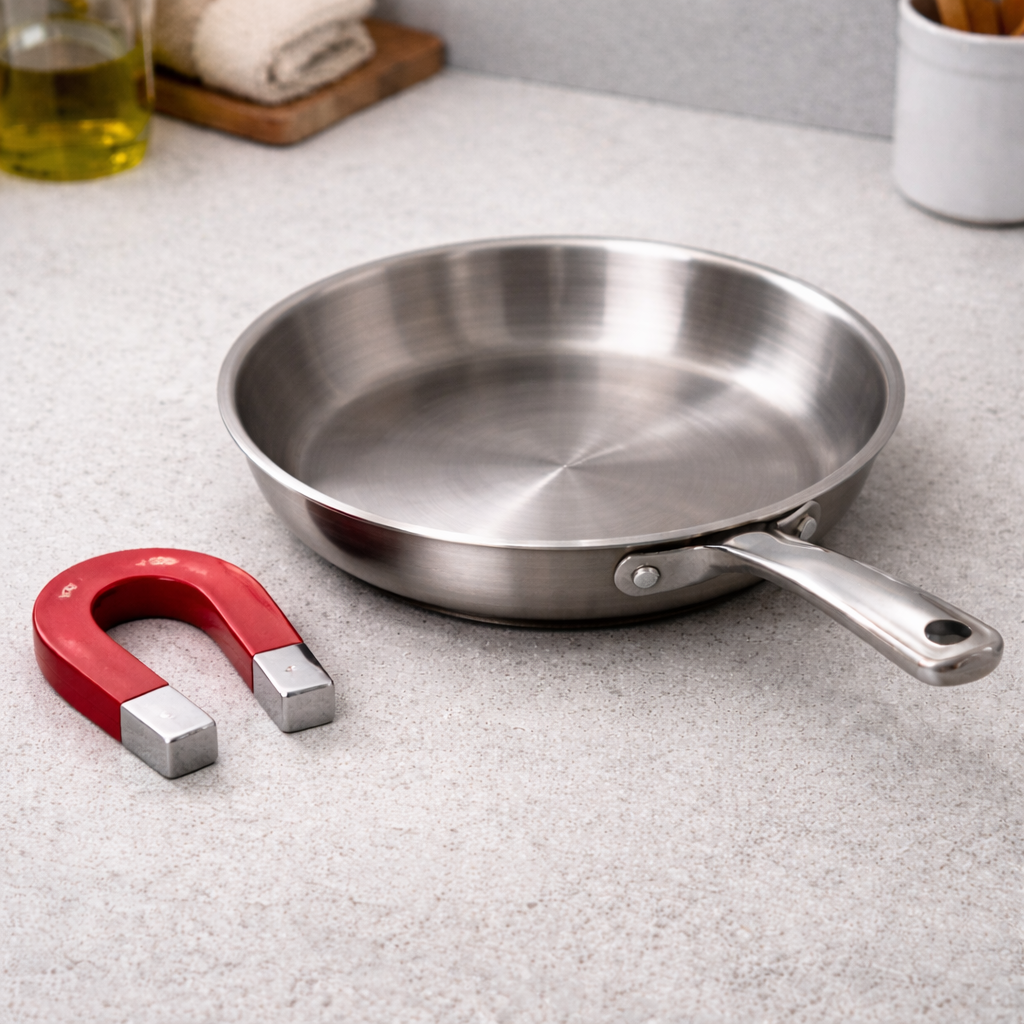
Hold a magnet up to the bottom of the pan.
- If the magnet sticks firmly, the pan is induction compatible.
- If it does not stick at all, the pan will not work on induction.
This test works because induction relies on magnetism to create heat in the pan itself.
Important limitation
Passing the magnet test does not guarantee great performance. Some pans barely pass and can still cause issues like buzzing, uneven heating, or burner shutoffs.
This explains why a pan may technically work but still feel frustrating to use.
(See also: “What Pans work on Induction Stoves“)
Test 2: The burner detection test
If you already have an induction cooktop, this test is even more telling.
Place the pan on the burner and turn it on.
- If the burner activates immediately, the pan is detected.
- If the cooktop flashes, beeps, or shuts off, the pan may not be compatible or may be poorly matched to the burner size.
Try this on more than one burner if possible. Some pans behave differently depending on burner diameter.
This test helps identify pans that pass the magnet test but still struggle with real-world induction use.
(See also: Why Does My Induction Stove Turn Off When Cooking)
Test 3: The real cooking test
This is where performance matters most.
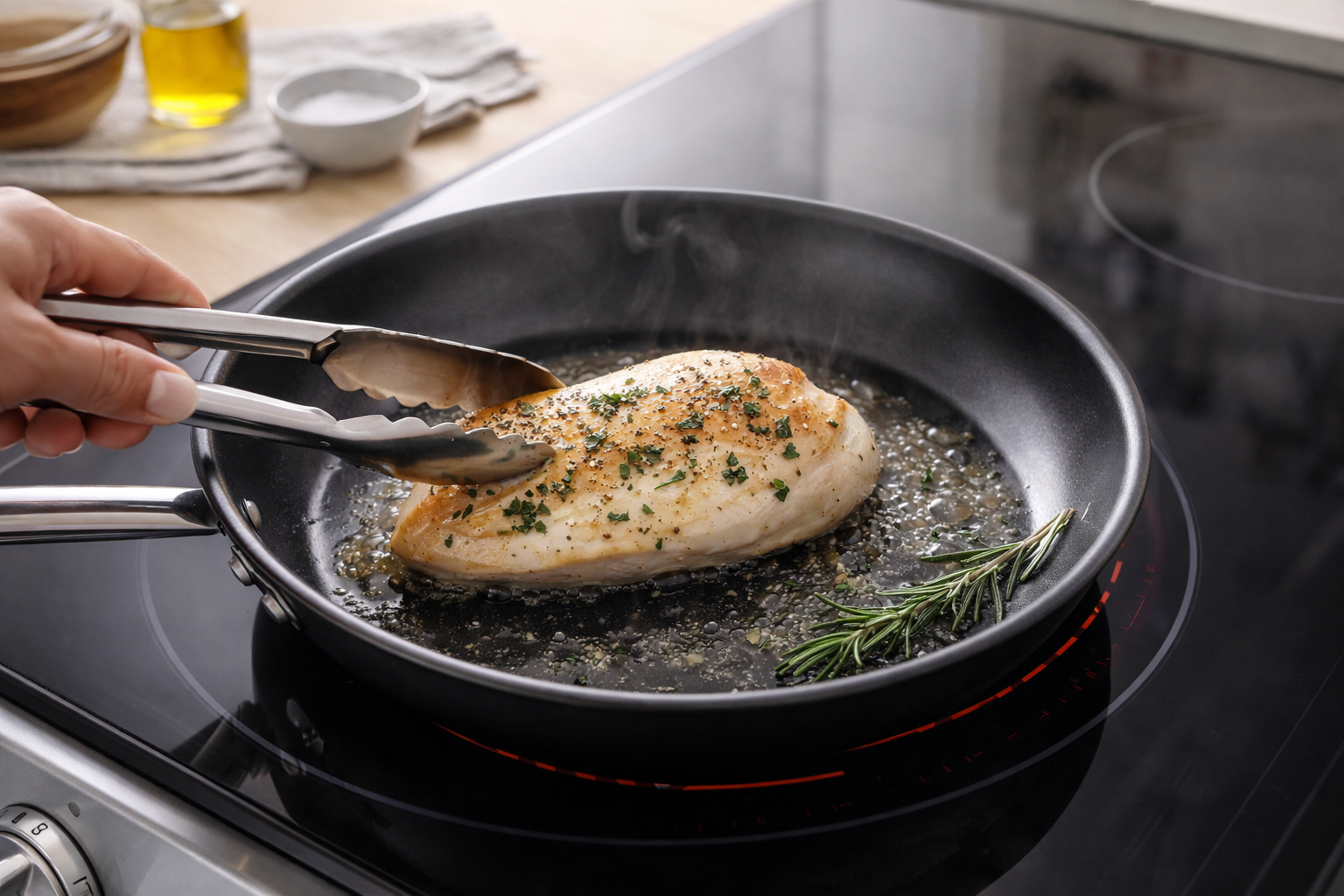
Fill the pan with a small amount of water and heat it on a medium setting.
Pay attention to:
- How quickly it heats
- Whether the heat feels steady
- Any clicking or buzzing noises
- Whether the burner stays on consistently
A good induction pan heats quickly, stays stable, and feels predictable.
If the pan heats unevenly, makes loud noise, or causes the cooktop to shut off, it may be technically compatible but not a great fit.
(See also: Why Does My Induction Stove Make Clicking or Buzzing Noises?)
Common myths about induction compatibility
“Stainless steel always works”
Some stainless steel pans are induction compatible, but not all. Only stainless steel that contains enough magnetic material will work.
“Heavier pans are always better”
Weight helps, but flatness and construction matter just as much. A warped heavy pan can perform worse than a lighter, well-built one.
“If it heats, it’s fine”
A pan that heats at high power but fails at lower settings may cause simmering problems or shutoffs later.
Does the magnet test always work?
The magnet test is a good first step, but it is not perfect. Some pans pass the test but still perform poorly due to thin bases, uneven construction, or weak magnetic layers.
That is why real burner and cooking tests matter just as much.
What to do if a pan technically works but performs poorly
If a pan passes all tests but still frustrates you, try:
- Using a slightly lower power level
- Making sure the pan is perfectly centered
- Switching to a burner that better matches the pan size
If problems persist, the pan may not be worth keeping for induction use, even if it technically works.
The bottom line
The magnet test tells you if a pan can work on induction. The burner and cooking tests tell you whether it works well.
Once you identify which pans perform best, induction cooking becomes faster, quieter, and far more predictable.
If you are troubleshooting noise, shutoffs, or uneven heating, pan compatibility is often the missing piece.
(See also: How Induction Cooking Works)